A viral strain dubbed novel coronavirus (2019-nCov), also known as the Wuhan coronavirus, has been recently making global headlines. The outbreak of this virus began in mid-December 2019, but has been escalating since mid-January 2020. Emerging viral infections can pose major threats to public health, and as a result it is crucial to study the viral strains in an attempt to treat the symptoms of the illness and prevent it in the future.
2019-nCov is just one of a group of several viruses in the Coronavirus class. In humans, coronavirus infections cause respiratory problems, notably by many symptoms similar to those of the common cold. Rarer forms of this infection, such as severe acute respiratory syndrome (SARS) can be lethal. This condition (caused by SARS-associated coronavirus) is well known from a 2003 outbreak, which began in Asia and spread to the United States.
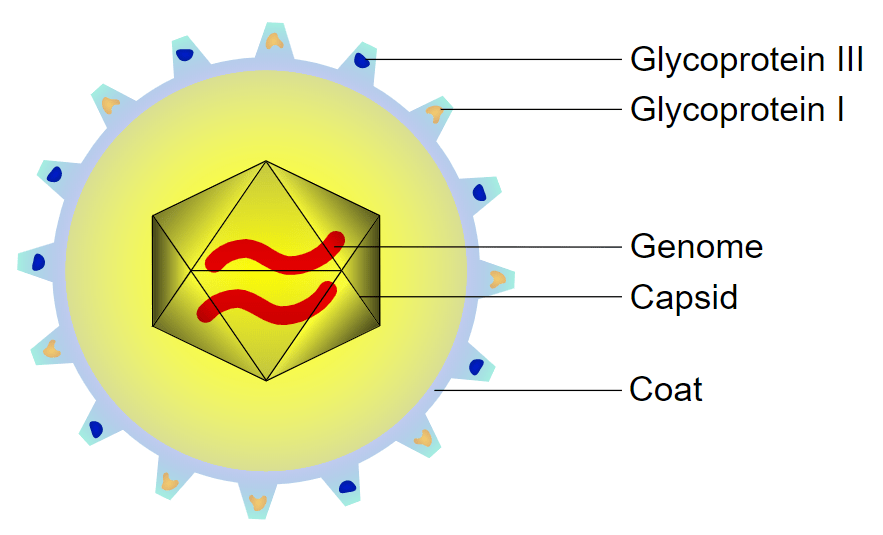
Coronavirus is a type of enveloped virus. This means that its surface is covered in different types of proteins, such as glycoproteins (proteins with an attached carbohydrate molecule). These glycoproteins bind to receptors on a host cell’s outer membrane and fuse to it, allowing the viral genome (encased in a capsid) to enter and infect the cell. Enveloped viruses are more adaptable than non-enveloped viruses, so they can change relatively quickly to evade a host’s immune system. One such way of changing/evolving is antigenic shift, whereby two or more different viruses combine to form a new subtype of virus with a mixture of surface proteins from the parent strains. Currently, there are no antiviral drugs or vaccines that have been approved for prevention or treatment of 2019-nCov, but several bio-pharmaceutical companies are reportedly working to develop one.
A recent study has found that the individuals originally affected by the virus were exposed to wildlife animals at the Huanan Seafood Wholesale Market, where various animals (ranging from poultry and other typical farm animals to snakes and bats) were being sold. After conducting a genetic analysis of the virus compared to other viral information, the researchers found that 2019-nCov is 96.2% genetically similar to a strain of coronavirus found in bat species. For comparison, 2019-nCov is 79.5% similar to SARS, another coronavirus strain that has infected humans and was traced to bats.
Similarity of new viruses (compared to older, already sequenced viruses) is important to health research and vaccine development. The previously-developed SARS vaccine may serve to help in the development of a vaccine for 2019-nCov. There are currently relatively few differentiated strains of 2019-nCov (implying that it evolved fairly recently) but its mutation rate and the effect of vaccines on the strains has yet to be seen.
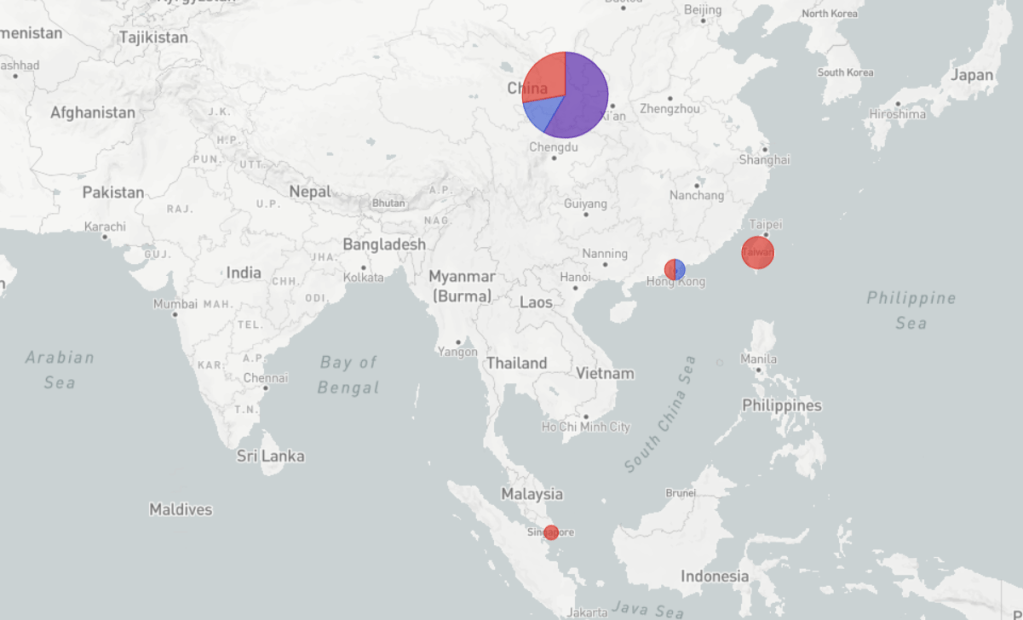
If you are interested in the relationship and closeness between different strains of coronavirus, check out Trevor Bedford’s fantastic interactive genetic tree! Bedford is a bioinformatics specialist at the University of Washington and Fred Hutchinson Cancer Research Center. The site linked above shows the relation between 2019-nCov, SARS, MERS (Middle East respiratory syndrome, another human coronavirus strain with an origin linked to… you guessed it, bats), and more, including a geographical map of different strains.

UPDATE (2/18/2020): I’d recommend reading this fantastic phys.org article if you’re curious on why exactly bat-to-human virus evolution is so common.
References
- Zhou P, Yang X-L, Wang X-G, Hu B, Zhang L, Zhang W, Si H-R, Zhu Y, Li B, Huang C-L, Chen H-D, Chen J, Luo Y, Guo H, Jiang R-D, Liu M-Q, Chen Y, Shen X-R, Wang X, Zheng X-S, Zhao K, Chen Q-J, Deng F, Liu L-L, Yan B, Zhan F-X, Wang Y-Y, Xiao G-F, Shi Z-L. 2020. Discovery of a novel coronavirus associated with the recent pneumonia outbreak in humans and its potential bat origin.
- Lucas W, Knipe DM. 2002. Encyclopedia of Life Sciences. Encyclopedia of Life Sciences. Macmillan Publishers Ltd.
- Cohen J. 2020. New coronavirus threat galvanizes scientists. Science.
- Hadfield J, Megill C, Bell SM, Huddleston J, Potter B, Callender C, Sagulenko P, Bedford T, Neher RA. 2018. Nextstrain: real-time tracking of pathogen evolution. Bioinformatics 34:4121–4123.
 American Biologist
One thought on “Coronavirus outbreak traced to strain of bat pneumonia”